2
Mar
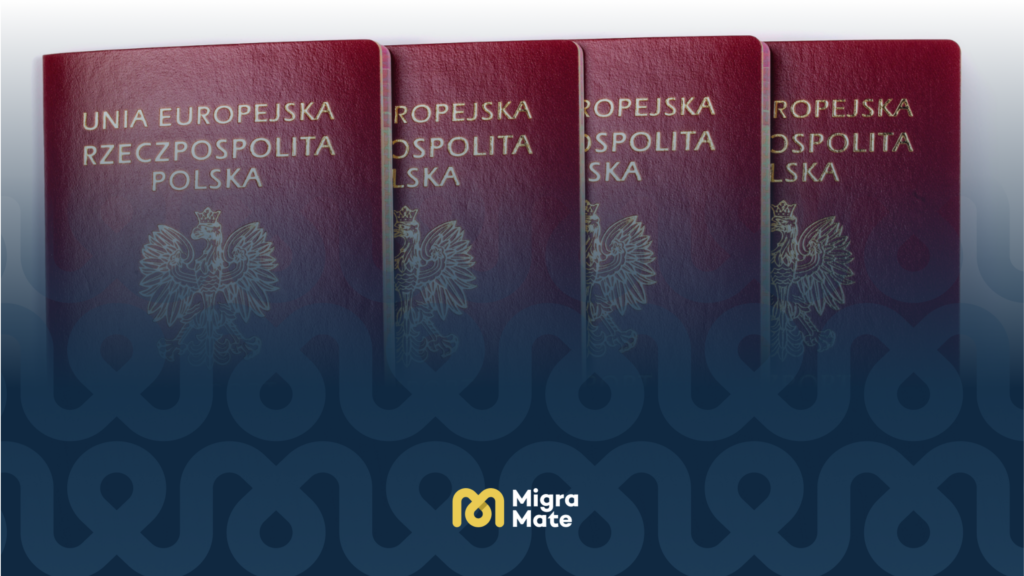
Do you have Polish roots? You might already have Polish citizenship.
Obtaining Polish citizenship may seem complicated—the regulations provide for several distinct procedures, and each requires meeting strictly defined conditions. However, it is worth answering a fundamental question first: do you really need to “obtain” it? According to the principle of the right of blood (ius sanguinis), Polish citizenship is acquired by law (ex lege) if at least one parent was a Polish citizen. In many cases, this means that the citizenship already exists, and all that is needed is its formal confirmation, which, in turn, requires analyzing the legal situation of your ancestors in light of historical laws. Therefore, before you begin efforts to be granted or recognized as a citizen (naturalization process), it is worth determining whether a Polish passport is closer than you think.
How is Polish citizenship acquired?
Under Polish law, citizenship can be obtained in several ways. The most popular of them is acquisition by law (ex lege), which rests on two foundations:
- The principle of the right of blood (ius sanguinis): This is the most common case. A child acquires Polish citizenship if at least one of the parents is a Polish citizen—regardless of where the child was born.
- The principle of the right of the soil (ius soli): Used less frequently, mainly to prevent statelessness. It applies to children born on the territory of the Republic of Poland whose parents are unknown or do not possess any citizenship.
Other paths to obtaining a Polish passport
If you did not acquire citizenship by law at birth, the Polish legal system offers other paths to citizenship. Our team helps tailor the appropriate procedure to your individual situation:
- Granting of citizenship by the President of the Republic of Poland: This path is based on the constitutional prerogative of the President, who is not bound by rigid statutory criteria and can grant citizenship to any foreigner. However, it must be remembered that this is a fully discretionary decision, meaning there is no formal list of conditions guaranteeing success. During preparations for this process, we place particular emphasis on demonstrating connections to Poland that can strengthen the chances of a favorable outcome.
- Recognition as a Polish citizen: Unlike the presidential grant, this is an administrative procedure based on specific criteria. It is aimed at foreign nationals who, among other things, have been legally residing in Poland for years, know the Polish language (confirmed by a certificate), have a stable source of income, and meet other criteria stipulated in the act.
- Restoration of citizenship: A procedure dedicated to individuals who held Polish citizenship but lost it before January 1, 1999. This is the easiest route for those who lost their Polish citizenship as a consequence of the political and social climate of that time.
The procedure for confirming Polish citizenship
In practice, we increasingly encounter individuals who—although they are Polish citizens in the eyes of the law—do not possess a document confirming this fact. These individuals have functioned solely as citizens of another country for years. In such situations, the procedure outlined in Chapter 7 of the Act of April 2, 2009, on Polish Citizenship (Journal of Laws of 2025, item 1611, as amended) applies: namely, proceedings for the confirmation of possession of Polish citizenship.
This is a fundamentally different proceeding than granting citizenship or recognizing someone as a Polish citizen (naturalization). The proceeding is declaratory in nature—its purpose is to demonstrate that Polish citizenship was acquired by law and has not subsequently been lost. Therefore, the administrative body does not “grant” citizenship, but rather confirms its existence.
Case Study:
A common example is the case of a person who knows that their ascendants (grandparents) were born and raised in Poland, then emigrated, and subsequent generations (parents) never held a Polish passport, while the interested party themselves holds only the citizenship of another state. In such a configuration, it is crucial to establish whether the ancestor was a Polish citizen and whether, at any point, there was a loss of citizenship based on the regulations in force during a given historical period.
In matters of this kind, analyzing the prior legal status is of fundamental importance. Previous laws provided for the possibility of losing citizenship due to, among other things, acquiring the citizenship of a foreign state, undertaking military service in a foreign army, or making specific declarations to the authorities of another state. After a detailed analysis of the documents, it is possible to exclude the premises for the loss of citizenship and demonstrate the continuous possession of it by the ascendants right down to the interested party. Consequently, the administrative body issues a decision confirming the possession of Polish citizenship.
From jurisprudence (case law):
In the context of the issues discussed, it is worth referring to the jurisprudence of administrative courts, in particular to the judgment of the Voivodeship Administrative Court in Warsaw, file reference number IV SA/Wa 1611/18. This case serves as a prime example of how crucial it is in proceedings for the confirmation of Polish citizenship not only to refer to the appropriate historical regulations, but above all, to precisely demonstrate the factual circumstances using unequivocal evidence.
The applicant submitted an application for the confirmation of possession of Polish citizenship to the competent Voivodeship Office. The authorities conducted the proceedings based on the provisions of the Act of April 2, 2009, on Polish Citizenship, while also taking into account earlier regulations, including the Act on the Citizenship of the Polish State of 1920 and the provisions of the Act of January 8, 1951, on Polish Citizenship.
A number of documents were attached to the application, including a copy of the parents’ marriage certificate, as well as decisions confirming the Polish citizenship of the applicant’s siblings. According to the 1920 Act, citizenship was acquired through birth—children born in wedlock acquired citizenship from their father, children born out of wedlock from their mother, or through entitlement, recognition, or adoption. However, the authorities pointed out a significant doubt: the applicant’s birth certificate was not attached to the proceedings. Consequently, the presented documents only allowed for the presumption of paternity. In the aforementioned case, attention was drawn to various possible legal scenarios—if the applicant were not the biological son of a Polish citizen, and a later adoption took place, it could mean that he would not have acquired citizenship under the 1920 Act. In such a case, the provisions of the 1951 Act, which introduced different rules for acquiring citizenship, would apply.
In this matter, the authorities only had a presumption at their disposal, rather than a certain factual finding regarding paternity. In proceedings for the confirmation of citizenship, a presumption is not sufficient. It is necessary to demonstrate beyond doubt that citizenship was acquired by law—in this instance, based on the provisions of the 1920 Act, which stipulated the acquisition of citizenship by a child from the father. The lack of unequivocal proof of origin meant that alternative factual states could not be excluded, which—when applying historical regulations—could lead to a different legal assessment. As a result, in light of the collected documents and based on historical regulations, the authorities could not confirm the possession of Polish citizenship. The refusal decision was upheld by the Voivodeship Administrative Court, and subsequently by the Supreme Administrative Court.
The case described in the jurisprudence clearly shows that in citizenship matters, presumptions are not enough. Rather than guessing whether you meet the requirements, rely on professional advice. Book a case evaluation, and we will review your situation, identify the best solutions, and choose the course of action tailored to your situation and goals.